Sebaztian Baz
Sebaztian Baz is a multidisciplinary artist who has explored music, sculpture, photography, drawing, and painting before ultimately finding his true vocation in cinema. His debut feature film Sombras Chinas received recognition at multiple international film festivals and marked a milestone by becoming the first vertical feature film in the history of cinema to receive a theatrical release. The film premiered on September 25, 2025, at the historic Cine Gaumont in Buenos Aires, Argentina. He is currently developing his next feature film, Camaldoli.
6/10/20264 min read
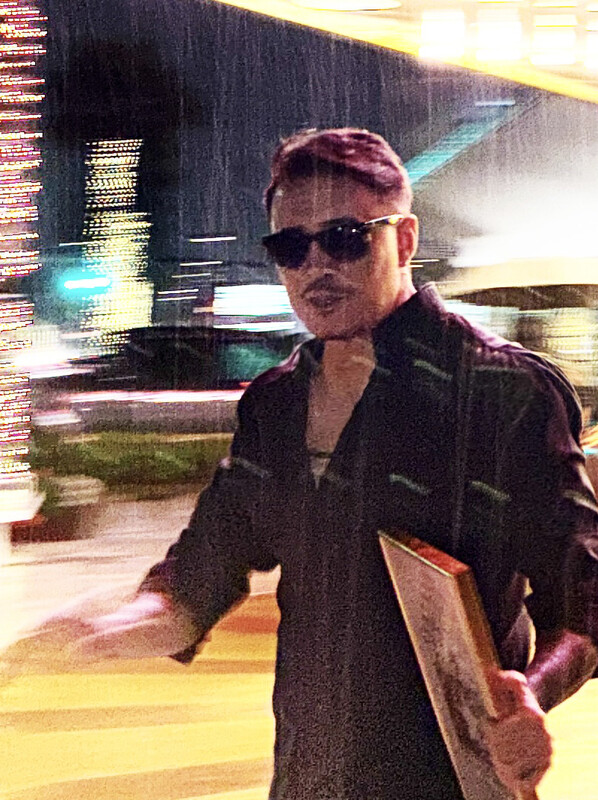
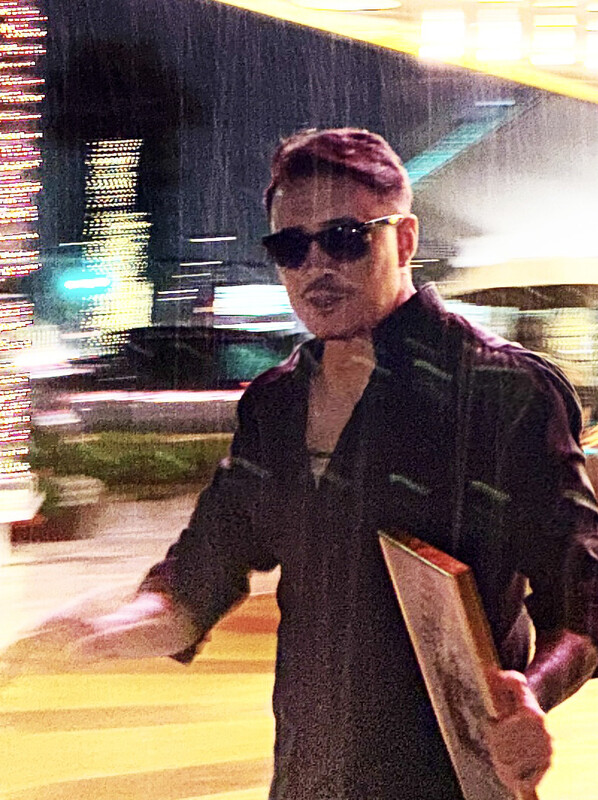
Can you explain to the audience your career?
I am an independent Argentine artist. I spent many years making music and working in different areas of audiovisual and film production, which eventually led me to Sombras Chinas, my first feature film as a director.
How many years have you been making movies?
I have spent more than a decade studying, working, and creating audiovisual projects, including music videos and short films. As a writer, director, and producer, Sombras Chinas is my first feature film.
Why did you start making movies?
Because I have always felt an artistic need to tell stories. At first, I expressed it through song lyrics, photography, and painting, until cinema allowed me to bring together many of the things I am passionate about.
Tell us a little about your project. What will the audience be able to see in your film?
Sombras Chinas is a satire about social media that uses romance and thriller elements to ridicule certain online behaviors that turn any subject, whether ordinary or tragic, into a constant frivolous spectacle. To achieve this, the film uses a vertical format and the visual language of platforms such as Instagram and TikTok, bringing to the cinema what could be described as a giant smartphone projected onto the big screen.
Why did you do this project?
Because I am interested in exploring how social media has changed the way we connect, present ourselves, edit our online lives, and consume images. We are surrounded by carefully constructed versions of people, where imperfection is often hidden behind the appearance of a perfect truth. I was also very interested in exploring the vertical format as another narrative tool within cinematic language.
One of the problems some directors encounter is directing actors and dealing with some actors, especially in the amateur world. How do you see this topic? What kind of work do you do with them?
The first thing I do is cast actors who understand the essence of the character, even if they are still developing some technical skills. The second is making sure they are responsible and committed to the project. From there, I work with them on building the character through rehearsals, backstory, objectives, and actions. I try to avoid result-oriented direction or asking for specific emotions; instead, I focus on actions and on what each character wants to achieve from the other in every scene. In that sense, my approach is strongly influenced by the teachings of Judith Weston.
A good movie takes care of all departments. But normally we can not allocate all the resources to have a good photography or spend a lot of money on sound post production or budget to hire actors. In your project what % have you allocated to. I don't just mean money but time as well. Of 100% of the time/money, what % did you dedicate to each department?
In low-budget independent Argentine productions, it is difficult to measure this precisely because many areas overlap. However, it was essential to allocate resources to the cast, catering, transportation, and locations. We worked under a cooperative model, where many actors and crew members contributed their work and even their own equipment, receiving a future percentage of the profits according to their contribution.
-Direction: 15%
-Photography: 15%
-Sound: 15%
-Postproduction: 20%
-Work with actors: 20%
-Art direction/locations: 15%
If you could go back, what would you change about this project? (1 thing only)
With the experience of seeing the finished film, I would spend more time refining certain aspects of the screenplay during the development stage. I believe every project teaches you things that you only discover once you see the complete film.
What are you happiest about this project?
Having previously recorded albums and produced music videos and short films, I learned firsthand that a feature film is a far more complex challenge on every level.
What makes me most proud is having completed the entire journey, from development and pre-production to filming, post-production, and release. Reaching the finish line brings me tremendous happiness
Make a wish to the movie gods. What do you ask?
I would ask for the superpower to keep making films for the rest of my life, and for those films to be stories that find and connect with their audience. And if I am allowed a second wish, a time machine like Marty McFly's, so I can learn the results of future bets, win them in the present, and have a great budget to make those films.
What movie would you have liked to direct?
It is difficult to choose just one. It would have been a privilege to direct Taxi Driver by Martin Scorsese, Blue Velvet by David Lynch, Dogman by Matteo Garrone, or Mystic River by Clint Eastwood. They are four extraordinary films, very different from one another, yet all of them possess a strong identity and a remarkable ability to explore human complexity.
What kind of cinema do you like? Genre, directors, actors?
I am drawn to films with a strong authorial vision and broken, complex, imperfect characters. The directors I admire most are Martin Scorsese, David Lynch, Clint Eastwood, Lars von Trier, and Robert Altman. As for actors and actresses, I especially admire Robert De Niro, Marcello Fonte, Sean Penn, Leonardo DiCaprio, Mark Wahlberg, Gena Rowlands, Meryl Streep, Julianne Moore, and Anna Mirodin.
Imagine that all the movies are going to be lost. If you could save 3 movies, what would they be?
I would save Taxi Driver, Indiana Jones and the Last Crusade, and Sombras Chinas.
If you have more projects underway, can you give us a bit of information?
I have recently completed my new feature screenplay, Camaldoli, and I am beginning the process of seeking financing. It is a psychological thriller disguised as a dark comedy about a family of brothers and sisters who spent years remaining silent about a troubling family secret and are finally forced to confront the truth. I am also working on two documentaries and a music project, all at different stages of development.